
So-Brite
Low Voltage vs Line Voltage Lighting
Jun
If you install exterior lighting for a living, the low voltage vs line voltage lighting decision affects more than fixture specs. It shapes labor time, design flexibility, code requirements, long-term maintenance, and the kind of jobs you can profitably sell. Get this choice right, and you can build systems that look better, install cleaner, and create stronger customer confidence from day one.
For most residential landscape and architectural lighting work, low voltage has become the practical standard. But that does not mean line voltage is outdated or wrong. In the right application, line voltage still solves real problems. The key is understanding where each system performs best and where it starts creating unnecessary complexity.
Low voltage vs line voltage lighting: what changes in the field
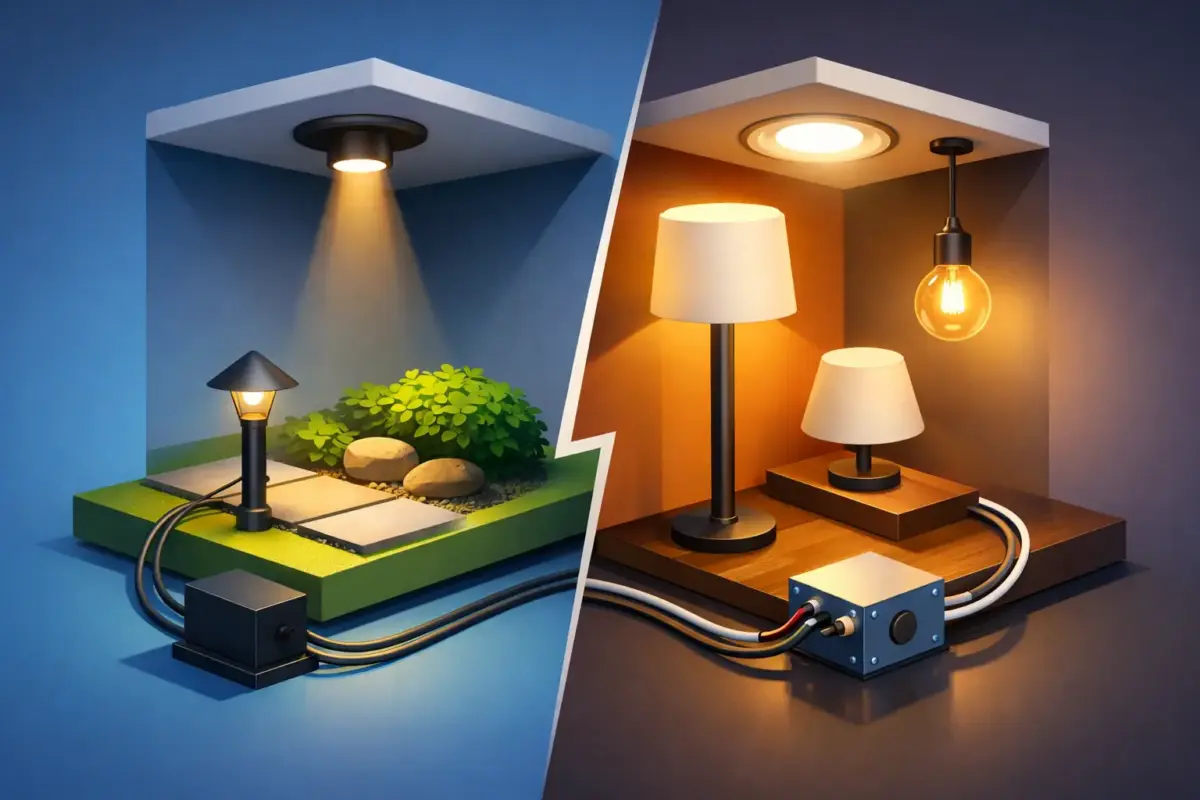
The basic difference is straightforward. Line voltage lighting typically operates at 120 volts in the US, while low voltage lighting usually runs at 12 volts through a transformer. That one distinction affects nearly every part of the job, from wiring method to fixture selection.
On a residential exterior install, low voltage usually gives contractors more control. You can place fixtures with greater freedom, adapt layouts more easily, and work with a system that is purpose-built for landscape effects, pathways, uplighting, wall washing, and accent lighting. That matters when the job is not just about illumination, but about creating a polished finished look that drives referrals.
Line voltage is more common when the fixtures demand direct 120V service, the loads are higher, or the project calls for longer runs and commercial-grade infrastructure. It can also make sense where an electrician is already involved and the design requires fewer fixture locations with more straightforward on-off functionality.
Where low voltage lighting usually wins
For outdoor living contractors and lighting installers, low voltage often aligns better with how exterior projects are actually sold and built. Most homeowners do not ask for voltage. They ask for curb appeal, safety, drama, and reliability. Low voltage makes it easier to deliver all four.
The first advantage is flexibility. Low voltage systems are easier to scale across planting beds, pathways, facades, columns, patios, and outdoor entertaining spaces. You can fine-tune fixture placement without the same level of wiring rigidity that often comes with line voltage planning. That leads to cleaner designs and fewer compromises when site conditions shift.
The second advantage is fixture variety. In landscape lighting, many of the most useful professional fixtures are built around low voltage platforms. That includes path lights, spotlights, well lights, wall washers, hardscape lights, and compact accent options. If your business depends on giving clients layered lighting effects instead of flat illumination, low voltage gives you a stronger design toolkit.
The third advantage is perceived simplicity for the end customer. A well-designed low voltage system feels modern, efficient, and purpose-built for residential exteriors. Add app-based controls, color options where appropriate, and durable weatherproof components, and you are not just selling lights. You are expanding your offering and increasing revenue with a premium service line.
Where line voltage lighting still makes sense
Line voltage is not automatically the wrong choice. It simply belongs in a narrower set of use cases.
If the project involves larger area lighting, certain commercial applications, or fixtures designed specifically for 120V operation, line voltage may be the more direct solution. It can also be useful where voltage drop becomes a serious concern across long distances and the system design does not lend itself well to distributed transformers or segmented low voltage runs.
Some property types also favor line voltage because of infrastructure already in place. On commercial sites, multifamily properties, or certain architectural lighting jobs, using line voltage fixtures may fit the electrical plan more naturally. In those cases, the question is less about which voltage is universally better and more about which one integrates better with the rest of the build.
That said, line voltage usually brings more installation constraints. You may need stricter wiring methods, deeper coordination with licensed electrical work, and less freedom to make quick layout adjustments once the project is underway. For many dealers and installers, that translates into slower production and tighter margins unless the job size justifies it.
Installation tradeoffs that affect profitability
This is where the low voltage vs line voltage lighting conversation gets practical. Dealers do not make money on theory. They make money on efficient installs, dependable products, and systems that do not create callbacks.
Low voltage lighting generally supports faster deployment on many exterior projects. Transformers centralize power conversion, fixture wiring can be more adaptable, and the systems are often easier to configure around landscaping and architectural features. That can reduce install friction, especially for teams focused on residential work and repeatable production.
Line voltage can be more labor-intensive depending on local code, fixture requirements, trenching needs, and the level of electrical coordination involved. None of that makes it bad. It just means your estimating has to be sharper. If you price it like a simple landscape lighting install when it behaves like an electrical infrastructure project, your margin can disappear quickly.
Maintenance matters too. A low voltage system built with quality components can be straightforward to service and expand. Replacing fixtures, adjusting beam angles, or extending a lighting plan is often easier than with a fixed line voltage layout. That supports recurring revenue opportunities because customers frequently want to add zones, upgrade effects, or extend coverage over time.
Performance, brightness, and the myth that line voltage is always stronger
Many buyers assume line voltage means brighter, more powerful lighting. That is not really the right comparison. Brightness depends on the fixture, optics, LED quality, beam spread, driver design, and system layout more than voltage alone.
A professional low voltage LED fixture can deliver excellent output for uplighting, grazing, pathway illumination, and architectural accents. In many residential applications, it is more than enough. In fact, the better question is whether the system creates the right effect without overlighting the property.
This is where experienced installers separate themselves. The goal is not maximum brightness. The goal is visual control. You want clean beam placement, balanced contrast, and a finished result that looks premium at night. Low voltage systems are often better suited for that kind of layered exterior lighting design.
Line voltage may still be preferable for certain high-output fixtures or applications where broader area coverage is the priority. But for visual impact around homes, hospitality spaces, and outdoor living environments, low voltage often delivers the more refined result.
Cost is not just fixture price
It is tempting to compare low voltage and line voltage based on upfront hardware cost alone, but that misses the bigger business picture.
Low voltage projects usually require a transformer and thoughtful load planning. That is part of the system cost. But they can also reduce installation complexity, open up a wider range of fixture options, and make it easier to upsell design enhancements. Those factors often improve total project economics.
Line voltage systems may avoid transformer costs, but they can increase labor demands and restrict design flexibility. If fixture placement is less forgiving or installation requires more specialized electrical work, the total installed cost can climb fast.
For dealers trying to scale, the better model is the one that supports repeatable installations, dependable product availability, and premium customer outcomes. In many exterior categories, that points toward low voltage LED systems because they fit the sales process and the field workflow more efficiently.
Which system should your business lead with?
If your core market is residential landscape lighting, architectural accent lighting, permanent exterior lighting, or outdoor entertaining spaces, low voltage should usually be your primary offering. It is easier to design around, easier to adapt, and easier to position as a premium upgrade.
If you handle larger commercial jobs, specialty builds, or applications with unique electrical demands, line voltage should still be part of your decision framework. You do not need to force every project into one category. Strong contractors win by matching the system to the site, not by defending a single approach.
For many growing lighting businesses, the real opportunity is standardization. When you build your operation around dependable low voltage product lines, weatherproof accessories, controls, and installation components that work together, your crews move faster and your proposals become easier to sell. That is one reason many dealers choose to source through partners like So-Brite that support business growth, not just product fulfillment.
The smarter way to frame the conversation with customers
Most clients do not care whether a system is 12V or 120V until you make it relevant. What they care about is safety, appearance, long-term reliability, operating cost, and whether the finished project feels worth the investment.
So frame the conversation around outcomes. Explain when low voltage supports cleaner design, easier expansion, and better exterior lighting effects. Explain when line voltage is justified by the scale or demands of the property. That positions you as a professional advisor instead of a contractor pushing whatever is easiest to stock.
The best lighting businesses grow by making confident recommendations that hold up after installation. When you understand the tradeoffs between low voltage and line voltage, you can price with more confidence, design with more precision, and build an offering that creates both customer satisfaction and stronger margins.
