
So-Brite
Color Changing Soffit Lighting System Guide
Apr
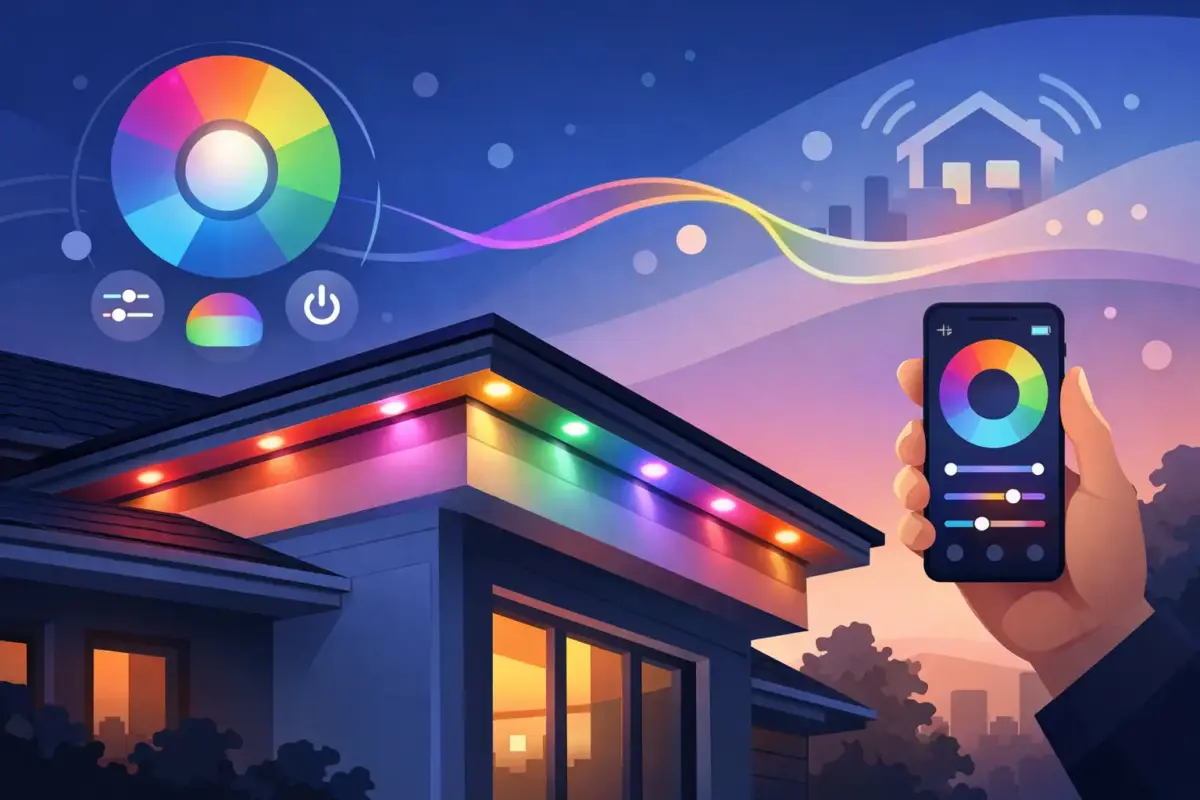
A homeowner points at the roofline and says, “I want it clean, bright, and not just for Christmas.” That moment tells you exactly where the market is going. A color changing soffit lighting system is no longer a niche add-on. It is a year-round exterior upgrade that helps installers close larger tickets, serve more property types, and create repeatable revenue with one product category.
For dealers and contractors, that matters because soffit lighting sits at the intersection of aesthetics, functionality, and margin. It can deliver holiday effects, architectural accent lighting, security-minded illumination, and app-controlled customization without asking the customer to hang temporary lights every season. When the system is built right, it becomes an easy value story: permanent installation, premium look, low maintenance, and daily usability.
Why a color changing soffit lighting system sells
The strongest exterior lighting products do more than look impressive at night. They solve a practical problem while creating an emotional result. Soffit lighting does both. It gives homeowners and commercial property owners a polished, HOA-friendly lighting solution that stays discreet during the day and performs at night.
That business case gets even stronger when the system changes color. Customers are no longer buying a fixed architectural light. They are buying flexibility. One install can support warm white for everyday curb appeal, team colors for game day, red-white-and-blue for patriotic holidays, and full-scene effects for events or seasonal promotions. For commercial accounts, that flexibility can be a deciding factor because it turns the building itself into a marketing asset.
From a dealer perspective, the appeal is simple. You are not selling a single-use product. You are selling a premium exterior lighting platform that expands your offering and increase revenue across residential and commercial jobs.
What separates a professional soffit lighting system from a commodity product
Not every color changing soffit lighting system is built for real-world installation. On paper, many products sound similar. In the field, the differences show up fast.
Housing quality matters because soffit lights live outdoors year-round. UV exposure, rain, heat, cold, and debris all test the components. A dealer-friendly product needs durable materials, weatherproof construction, and connectors that hold up over time. If the product fails after one season, the service call eats your margin and damages trust.
Control quality matters too. Customers expect simple app management, reliable grouping, and smooth color transitions. If the software feels clunky or inconsistent, the premium pitch falls apart. The best systems are easy for the homeowner to operate and easy for your team to commission on install day.
Then there is appearance. A good soffit system should feel integrated into the structure, not attached as an afterthought. Low-profile designs and clean mounting options are critical, especially in HOA-sensitive neighborhoods and higher-end residential projects where daytime appearance matters almost as much as nighttime output.
Where soffit lighting fits in your service mix
For many installers, soffit lighting is one of the smartest category expansions available because it bridges multiple sales conversations. If you already install landscape lighting, it gives you a natural upsell at the roofline. If you focus on holiday lighting, it gives you a permanent option that keeps revenue flowing beyond seasonal installs. If you handle outdoor living or home services, it creates a premium exterior enhancement that pairs well with patios, pathways, façade washing, and entry lighting.
This is why dealers who treat soffit lighting as a standalone category often leave money on the table. The better move is to position it as part of a broader exterior lighting solution. A customer may come in asking for holiday lights, but once they understand they can have app-controlled white light all year with color scenes on demand, the conversation changes. The same goes for a commercial property owner who starts with security lighting and ends up wanting programmable façade accents for branding and events.
The design decisions that affect performance and profitability
A successful install starts before the first fixture is mounted. Layout, spacing, controller planning, and power management all affect how the finished project looks and how profitable it is for your business.
Fixture spacing is one of the biggest visual variables. Tight spacing can produce a stronger, more continuous lighting effect, while wider spacing may work better for subtle accent applications or budget-sensitive jobs. There is no universal rule because soffit depth, façade color, mounting height, and customer preference all change the outcome. What matters is setting expectations and designing for the right effect instead of forcing the same layout onto every property.
Color rendering and white-light quality deserve attention as well. Many customers say they want color-changing lights, but what they use most often is white. If the warm white or soft white setting looks weak, harsh, or overly blue, satisfaction drops even if the color scenes are impressive. Dealers who understand this close more jobs because they sell the everyday value, not just the holiday excitement.
Power and control planning also affect job efficiency. Long runs, voltage drop considerations, controller placement, and expansion capacity should all be thought through upfront. A system that is easy to scale helps you add zones later, integrate adjacent lighting categories, and avoid costly redesigns when the customer wants phase two.
How to present the value to customers
Customers do not all buy for the same reason, so your pitch should not be one-size-fits-all. Some are motivated by convenience. They are tired of putting lights up and taking them down. Others care most about curb appeal and want the house to look elevated every night. Commercial clients may focus on branding, event flexibility, or property differentiation.
The strongest sales conversations connect features directly to outcomes. App control means fewer callbacks and easier scene changes. Permanent installation means no ladders every holiday season. A discreet soffit-mounted design means the home still looks clean during the day. Weatherproof components mean confidence through changing seasons. When you frame the system this way, the customer sees why a premium product commands a premium price.
It also helps to explain the year-round use case early. If the customer thinks this is mainly a holiday product, price resistance can go up. If they understand it as permanent architectural and event lighting with holiday capability built in, the investment makes more sense.
Why dependable sourcing matters as much as the product itself
A great product does not solve much if your supply chain is inconsistent. Dealers need a partner that can support repeat installs, offer a broad enough catalog to build complete systems, and reduce the friction that comes from piecing together products from multiple vendors.
That is where a one-stop sourcing model creates real advantage. When your soffit lights, controllers, power components, extension cables, and accessories come from one dependable supplier, estimating gets easier, installation gets cleaner, and service becomes more predictable. You spend less time troubleshooting compatibility and more time building revenue.
For growing businesses, that consistency is not just operationally helpful. It protects your reputation. If you are selling premium exterior lighting, customers expect premium execution. Product reliability, availability, and support all shape that experience.
The dealer opportunity in color changing soffit lighting system projects
There is a reason this category continues to gain traction across North America. It fits how customers want to buy exterior lighting now. They want smart control, visual impact, and products that work beyond a single season. A color changing soffit lighting system checks all three boxes.
For installers and contractors, it also fits how profitable service lines are built. It is visual, easy to demonstrate, and adaptable across residential and commercial properties. It creates upsell paths into landscape lighting, wall washing, pathway lighting, and additional zones. It supports recurring referrals because neighbors see it, ask about it, and want the same result.
That makes it more than a product trend. It is a practical growth category for businesses that want to expand with confidence. Companies like So-Brite are leaning into that opportunity by helping dealers access premium hardware, dependable sourcing, and the product breadth needed to build complete exterior lighting systems instead of isolated installs.
The contractors who win this market will not be the ones selling the cheapest lights. They will be the ones who can deliver a clean design, reliable performance, and a better ownership experience from estimate to final walkthrough. If you are looking for a category that strengthens your offering and creates room for larger, more profitable jobs, soffit lighting is a smart place to build next.
