
So-Brite
Dealer Guide to Exterior Lighting Sales
May
A customer points at the roofline, the front walk, and the backyard patio and asks one question: can you do it all? For contractors who want larger tickets and steadier recurring demand, that moment is where a strong dealer guide to exterior lighting starts. The companies that win are not just selling fixtures. They are selling a complete, dependable system that looks premium, installs efficiently, and keeps working through heat, rain, snow, and seasonal use.
Exterior lighting has moved well beyond single-purpose landscape jobs or temporary holiday installs. Homeowners and commercial property managers now want year-round curb appeal, smart color control, accent lighting, safety lighting, and clean architectural integration. For dealers, that creates a real growth lane. It also raises the bar. If your product line is inconsistent or your sourcing is fragmented, every project becomes harder to quote, harder to install, and harder to scale.
Why a dealer guide to exterior lighting matters
The fastest way to lose margin in this category is to treat it like a commodity. Exterior lighting is a system sale. Products have to work together across power, control, mounting, brightness, weather resistance, and visual finish. When one part of that system is weak, the jobsite slows down and the customer notices.
A practical dealer guide to exterior lighting should help you evaluate three things at the same time: what customers are asking for, what your crews can install efficiently, and what will support repeatable profit. Premium hardware matters, but so does line breadth. If you need one supplier for permanent roofline lights, another for pathway fixtures, and another for controllers and accessories, you are adding friction to every phase of the job.
That is why dealers who grow in this space usually build around a complete exterior offering rather than a few isolated products. The goal is simple: quote more confidently, install faster, and give customers options that increase project size without increasing complexity.
Start with the product categories that drive revenue
Most dealers enter exterior lighting through one category and expand from there. The opportunity gets much larger when you think in layers.
Permanent exterior lighting is often the strongest conversation starter because it solves a visible, emotional need. Homeowners like the idea of permanent holiday lighting that looks discreet during the day and dramatic at night. HOA-friendly designs matter here. If the system looks bulky or obvious on the house in daylight, objections rise quickly.
Architectural lighting is the next revenue layer. House eave lights, soffit lights, and wall washers help dealers move from seasonal messaging into year-round design value. This is where a project starts feeling custom instead of decorative. Customers are not just buying lights for a few holidays. They are buying control over the appearance of the property every night of the year.
Landscape lighting adds another profitable path. Pathway lights, spotlights, and accent fixtures give dealers a way to expand around planting beds, entries, monuments, signage, and outdoor living areas. These products often pair well with roofline and architectural systems because they complete the visual story of the home or commercial site.
Then there is the lifestyle layer. Strip lighting for outdoor features, café lights over patios, and color-changing systems for entertainment areas can raise average ticket size quickly. These are not always must-haves, but they are strong add-ons when presented properly.
What dealers should look for in exterior lighting systems
Not every LED product is dealer-friendly. Some may look good in a catalog but create problems in the field. A strong system should reduce callbacks, protect your installation time, and support premium pricing.
Weather resistance is non-negotiable. Exterior products face UV exposure, moisture, temperature swings, and physical wear. If housings, seals, or connectors are weak, the failure may not happen on day one, but it will come back to your crew later. Durable construction protects your reputation as much as the product itself.
Control is another make-or-break factor. Customers increasingly expect app-based scheduling, color changes, scene setting, and simple operation. Smart controls are not just a feature. They help justify premium pricing because they make the system feel modern and flexible. Still, there is a trade-off. Advanced control is only valuable if setup is straightforward enough for your team and intuitive enough for the end user.
Installation efficiency matters just as much as aesthetics. Extension cables, caps, power boxes, mounting solutions, and compatibility across product families can determine whether a job is clean and profitable or slow and frustrating. Dealers should favor systems built with real installation conditions in mind, not just showroom appeal.
Selling the job as a system, not a single fixture
Customers often begin with one visible pain point. Maybe they want holiday lighting without climbing ladders. Maybe they want a safer walkway. Maybe they want their building to stand out after dark. Strong dealers listen to the initial request, then guide the conversation toward a more complete solution.
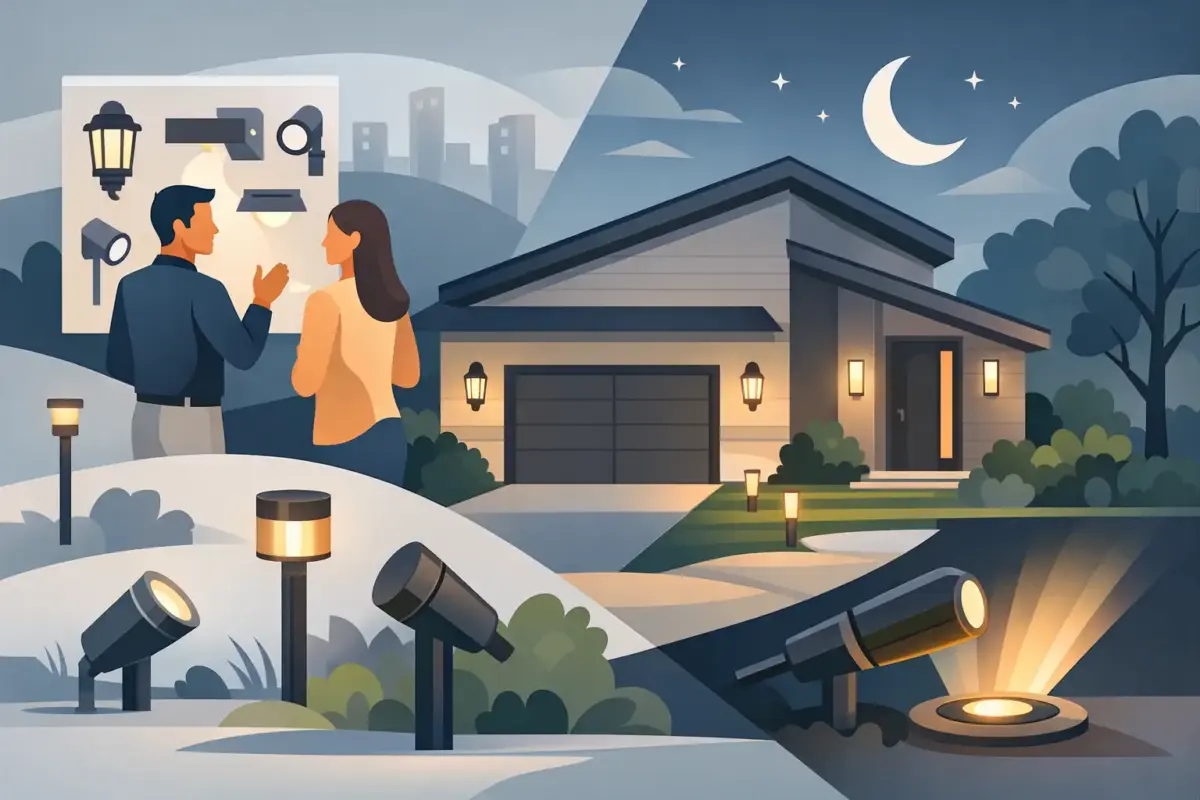
That does not mean overselling. It means showing how categories work together. Roofline lighting creates outline and presence. Wall washers add depth. Pathway lights improve safety and polish. Patio or string lighting extends usable space. When customers see the layered result, they are more likely to approve a larger scope because it feels intentional rather than pieced together.
This approach also protects margin. Competing on one product line alone pushes you toward price comparisons. Selling a complete design and installation package shifts the conversation to outcome, convenience, and long-term value.
Exterior lighting dealer guide for operational growth
A good product line can help you win jobs. A dealer-focused model helps you grow a business.
For many contractors, the real challenge is not demand. It is execution at scale. Can you source products consistently? Can you train crews around a repeatable install method? Can you quote confidently without worrying about backorders or mismatched accessories? Can you add new categories without rebuilding your process each time?
That is where dealer enablement matters. Wholesale access, broad catalog availability, dependable support, and products designed to work together reduce the hidden costs that eat away at growth. This category rewards speed and consistency. If your team can move from estimate to install without unnecessary delays, you can handle more jobs and protect the customer experience at the same time.
This is also why many installers are expanding from one service line into exterior lighting. A home service company with an existing customer base already has trust, local visibility, and crews in the field. Adding premium LED exterior systems creates a higher-value offering with strong visual impact and referral potential. One well-lit home on a busy street can do more marketing than a stack of mailers.
Choosing the right supplier is a profit decision
Price always matters, but low unit cost is not the same as strong dealer value. If the supplier cannot support your growth, the cheapest fixture can become the most expensive decision.
Dealers should evaluate supplier relationships based on product depth, consistency, ease of ordering, and business support. A one-stop sourcing model has real advantages. It simplifies procurement, reduces compatibility issues, and helps standardize your installs. That kind of efficiency matters when you are trying to expand your offering and increase revenue without creating chaos behind the scenes.
It also helps to work with a partner that understands dealer economics. You need premium products that support margin, not products that force you into a race to the bottom. You need enough range to serve both residential and commercial properties. And you need solutions that look clean, perform reliably, and give customers a reason to choose professional installation over a DIY workaround.
That is where brands built around dealer success stand apart. So-Brite, for example, positions its catalog and dealer support around a simple business reality: contractors need dependable exterior lighting systems that are profitable to install and easy to scale.
Where the best opportunities are right now
The strongest growth opportunities sit at the intersection of aesthetics, convenience, and year-round utility. Permanent holiday lighting remains a major entry point because customer awareness is high and the benefit is obvious. But dealers who stop there leave money on the table.
The bigger play is year-round exterior lighting as a property enhancement category. Homeowners want curb appeal, security, and outdoor lifestyle upgrades. Commercial clients want visibility, branding, and a polished nighttime presence. Both markets value low-maintenance systems, energy efficiency, and customizable color.
That means dealers should think beyond seasonal campaigns. Position exterior lighting as an upgrade that works every night, for every occasion, across every season. That framing supports larger projects and steadier demand.
The dealers who gain momentum in this space are the ones who standardize around quality, train around efficient installs, and sell complete outcomes instead of isolated parts. If you build your business around dependable systems and a supplier model that supports growth, exterior lighting becomes more than an add-on. It becomes a serious revenue channel with room to expand.
