
So-Brite
Guide to Permanent House Lighting
May
Every exterior lighting contractor has seen it happen: a homeowner asks for holiday lights, then starts asking about accent lighting, pathway lighting, app control, and a cleaner year-round look. That is exactly why a guide to permanent house lighting matters for growing installers. This category is no longer a seasonal add-on. It is a durable, premium service line that can increase ticket size, create repeat work, and help your business stand out.
Permanent house lighting sits at the intersection of curb appeal, convenience, and recurring demand. Homeowners want a system that looks discreet during the day, performs reliably at night, and gives them flexibility for holidays, game days, special events, and everyday architectural lighting. For dealers and installers, that creates a strong business case – if you choose the right products, install them correctly, and position the service as a long-term upgrade rather than a novelty purchase.
What permanent house lighting really includes
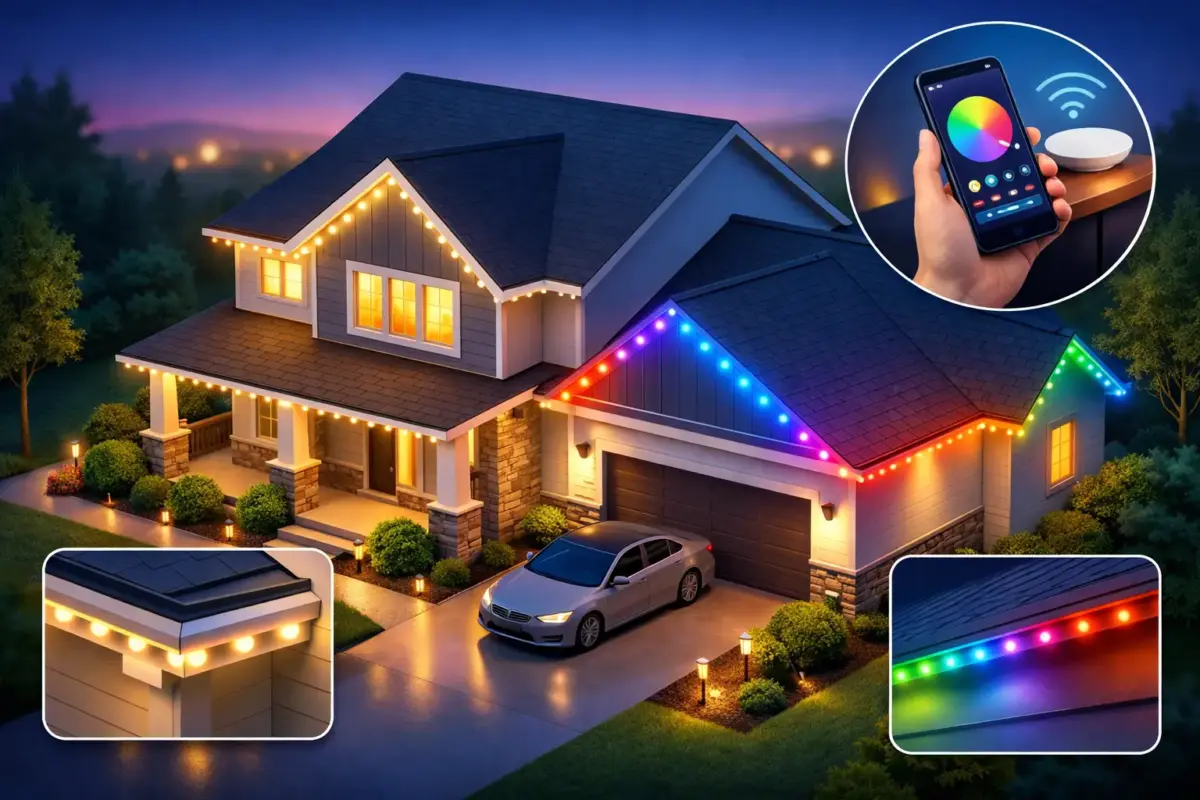
When most customers hear permanent lighting, they think of roofline holiday lights that stay up all year. That is part of the opportunity, but it is not the whole picture. A complete permanent house lighting system can include eave lights, soffit lights, wall washers, pathway lights, landscape fixtures, strip lighting, and café-style outdoor lighting tied together through one control approach.
That matters because the best projects are not always the ones with the most LEDs on the roofline. They are the ones that solve multiple homeowner goals at once. A clean eave-light install can handle holiday scenes, while wall washing highlights the front elevation and pathway lighting improves safety. The more complete the design, the more value the client sees and the more revenue your crew can generate on a single property.
There is a trade-off, though. A broader system requires cleaner planning around power, controller capacity, zoning, and wire runs. If your supply chain is fragmented or your product lineup is inconsistent, complexity can eat into labor efficiency fast.
A guide to permanent house lighting starts with the right product fit
Product selection shapes profitability more than most installers realize. If the lights are difficult to mount, the connectors are inconsistent, or the app experience creates customer frustration, the job does not stay profitable for long. The sale is only the beginning. The service experience is what protects your reputation.
Start with the daytime appearance. Permanent lighting sells best when it is HOA-friendly and discreet. Homeowners want the benefits of year-round lighting without the look of exposed temporary clips and wires. Low-profile systems that blend into eaves and soffits are usually easier to position as a premium upgrade.
Next is durability. Exterior lighting products need to hold up through heat, rain, wind, and UV exposure. In markets like Phoenix and the surrounding region, heat resistance is not a small detail. Materials, waterproof connections, and reliable power components all affect long-term performance. Cheap hardware may lower your upfront bid, but callbacks erase that advantage quickly.
Control matters just as much as hardware. Smart app control is now part of the expected customer experience. Homeowners want to change colors, save scenes, set schedules, and manage the system without needing a service call. For the installer, a dependable control platform also reduces support headaches and makes training customers easier at handoff.
Design for year-round value, not just December
If you present permanent house lighting as a holiday product, you cap your own revenue. If you present it as a year-round exterior lighting system with seasonal flexibility, you widen the opportunity.
The strongest proposals connect lighting to everyday use. Warm architectural lighting can elevate the home on ordinary evenings. Team colors work for sports weekends. Patriotic palettes fit national holidays. Soft white scenes can enhance outdoor entertaining. This approach shifts the conversation from one-time decor spending to an exterior upgrade with ongoing value.
It also helps close higher-end jobs. Homeowners are more willing to invest when they understand they are getting more than a few weeks of use each year. For commercial properties, the same principle applies. Restaurants, retail sites, event venues, and community spaces want programmable lighting that can support branding and seasonal changes without repeated installs and removals.
That said, not every property needs a full-package design. Some homes are best served by a focused roofline installation, especially if budget is tight or the architecture is simple. The key is to recommend the right scope, not the biggest scope.
Installation planning is where margins are protected
A clean install is not only about appearance. It is about speed, consistency, and fewer service calls. Before quoting, you need a clear view of mounting surfaces, peak lines, soffit depth, outlet access, controller location, and total run length. These details affect labor hours more than many contractors account for during early sales conversations.
Power planning deserves special attention. Controller and power-box capacity must align with the number of lights, zones, and effects you plan to deliver. Overcomplicating the system can create troubleshooting issues later. Underbuilding it can limit future expansion and make upgrades harder than they should be.
Accessories also deserve respect. Extension cables, caps, connectors, and mounting components are easy to treat as afterthoughts, but they influence install efficiency and finish quality. Dealers that can source all system components together usually operate faster and with fewer surprises than those piecing together jobs from multiple vendors.
Training your crew on a repeatable install process is what turns one good project into a scalable service line. The goal is not just to complete custom work. It is to create a system your team can price, install, and support with confidence across many homes and commercial properties.
How to position permanent lighting as a premium service
Permanent lighting is often compared against temporary holiday lights or low-cost consumer kits. That comparison can hurt you if you let the conversation stay on sticker price alone. The better path is to frame the offer around performance, appearance, convenience, and long-term ownership.
Premium customers respond to fewer hassles. No ladders. No seasonal setup. No take-down labor. No storage bins. No uneven strands or burned-out sections ruining the look. They also respond to customization. A color-changing system with scheduling and scene control feels more like a property upgrade than a decoration purchase.
For your business, premium positioning also protects margin. If your proposal clearly communicates durability, smart controls, professional installation, and year-round functionality, you are less likely to get dragged into a race to the bottom.
One strong approach is to show how permanent house lighting complements other exterior lighting services. A client who wants roofline color today may want pathways, uplighting, or patio ambiance next. That creates a natural expansion path without forcing a hard sell on day one.
Choosing a supplier can make or break the category
This is where many installers hit a ceiling. They may have demand, but they do not have a dependable supply model behind it. When products are backordered, quality shifts between batches, or accessory compatibility becomes a guessing game, growth stalls.
A dealer-focused supplier should help simplify the business, not add friction to it. That means broad product access, consistent quality, support for installers, and systems designed to work together. If you are serious about expanding your offering and increasing revenue, sourcing has to be part of the strategy.
A one-stop model is especially valuable when you want to serve both permanent holiday lighting and broader exterior lighting needs. It allows you to quote more complete projects, reduce procurement time, and keep your crews working with familiar components. That consistency is good for operations, and it is good for the customer experience.
For many growing contractors, this is the difference between occasionally selling lighting and building a true lighting division. Brands like So-Brite are built around that dealer-enablement mindset, which is exactly what installation businesses need when they want to scale rather than just experiment.
Where the market is headed
Permanent house lighting is moving from niche category to mainstream exterior upgrade. Homeowners are getting more comfortable with app-controlled systems. HOAs are warming up to low-profile installations that do not look temporary or cluttered. Commercial buyers are also recognizing the value of programmable lighting that supports branding and seasonal promotions.
That does not mean every market behaves the same way. Some areas respond fastest to holiday-driven marketing. Others lean harder into architectural lighting and landscape enhancement. The opportunity is there in both cases, but your messaging should reflect local demand and the property types you serve.
The contractors who win in this space are the ones who treat it like a real business line. They standardize products, refine install workflows, present year-round value, and work with suppliers that support growth.
Permanent house lighting is not just another add-on for your catalog. For the right business, it is a practical way to build stronger margins, deliver premium results, and create more reasons for customers to come back when they are ready to light the rest of the property.
